



Every time I open my browser, the line “Search or type web address” sits quietly at the top of the page.
It looks simple enough, yet it controls almost everything I do online.
Whether I’m searching for information, opening a familiar website, or checking something quickly, this one bar is where the entire journey begins.
Over time, I started realizing how important it is in my daily routine life.
It blends browsing and searching seamlessly and makes it more user-friendly than it has ever be.
Due to the fact that we often depend upon it, knowing what it does will assist us in browsing more efficiently, with greater efficiency and with less effort.
In this guide, we will explain why it’s important and how it can be efficient for you.
Check: How to Exclude Words from Google Search
What “Search or Type Web Address” Really Means
When my browser is first loaded I see two options:
First,enter a keyword in search of information on the internet, or type a URL and direct you to a web page.
This double purpose is what makes the address bar stronger than it appears.
If I’m not certain which direction I’m headed I just type in the phrase “best vegetarian recipes” and let Google take care of the rest.
When I know the address of the website I’m looking at, for example, typing in the address directly takes me to it with no additional steps.
This feature is available across nearly every popular browser–Chrome Edge, Safari, Firefox–although the text that appears in the bar could be different.
Whatever the appearance however, the objective is the same. one bar to cover all things.
In the midst of this simplicity is one of the most efficient browser tools The Omnibox.
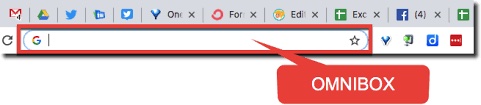
The Omnibox: More Than an Address Bar
Omnibox is the long input field located on top of Chrome. It easily performs more tasks than users realize.
For me, it’s been a tool that is quick to access for data, calculations, and navigation, without having to open different pages.
Instead of opening a search engine, you can directly put your questions and conversations in the bar and see the quick results.
This removes unnecessary steps and saves your time making the browsing experience more smoother.
Based on the user’s input, here’s what Omnibox can do:
- Search terms that are relevant to your search.
- Create shortcuts for websites that are based on my personal history
- Answer questions immediately (like calculations or the weather)
- Highlight possible matches
- Help me correct spelling
- Predict what I might be searching for next
It keeps track of what I’ve searched for in the past, and as time passes it becomes quite accurate at guessing what I require.
Using Keywords and Phrases to Search the Web
When I make use of the Omnibox to enter a search term or phrase Google will take over the search and provide me with a variety of results. This is the method I take when researching the world, studying about, or trying to evaluate information.
If I’m looking for the nearest service provider, a good deal, or information on a topic, searching with keywords makes sense.
Google offers videos, maps, links definitions, images and, sometimes, direct answers in one place.
For instance when I type “top digital tools for work” will give me lists, reviews and even articles from a variety of sources.
This lets me explore options I would not have thought of otherwise.
Using quotation marks or additional keywords can also refine searches, helping me narrow down results when precision is important.
Also Read: How to Drop a Pin in Google Maps
When to Search Google and When to Type a URL
Although the same bar can handle the two actions, searching as well as typing URLs serve two distinct functions.
I use search when:
- I want to explore multiple options
- I don’t know the exact website
- I’m researching a topic
- I want reviews or comparisons
- I want fresh information
I type a URL when:
- I know the exact website
- I don’t want to scroll through results
- I need fast access
- The page doesn’t appear easily in search
- I’m returning to a site I trust
Typing a URL is the direct approach.
Searching is the discovery approach.
Both are useful depending on what I need at the moment.
How Typing a URL Works
Typing a web address takes me straight to a specific destination.
It’s like entering coordinates on a map—the browser knows where to go instantly.
A URL is simply a website’s digital address.
If I enter it correctly, the browser loads it without any delay or interpretation.
This can be helpful when a website isn’t getting the attention it deserves on Google or if I want to avoid search results completely. For instance, entering www.spiderorbit.net directs me to the business regardless of whether the business does not appear at the beginning of results.
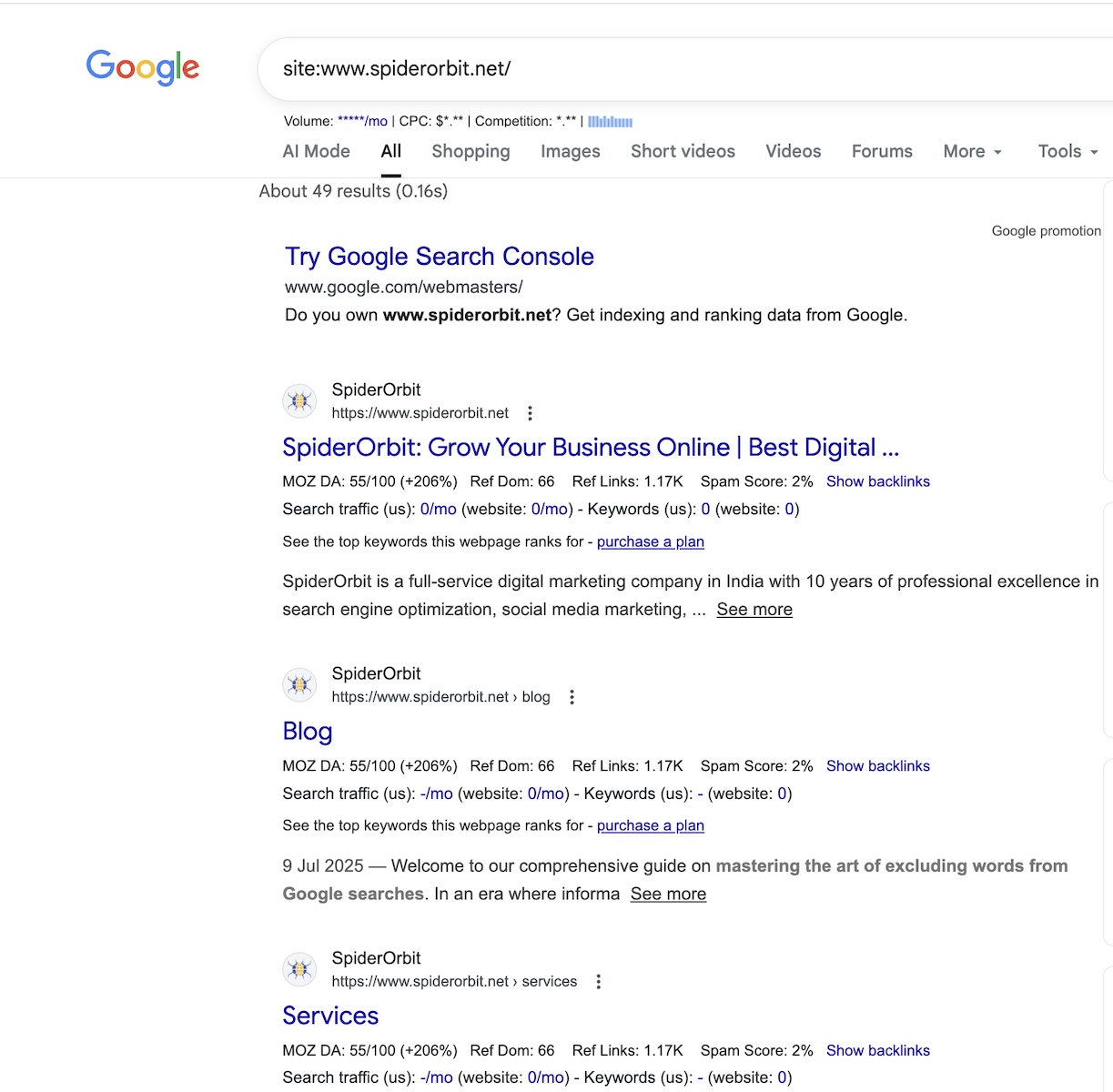
Using Google to Perform Targeted Searches
One advanced feature I enjoy using is Google’s search operators.
These are special commands that allow me to look for information in very specific ways.
Some of the most useful ones include:
- info: to gather details about a website
- related: to find similar websites
- cache: to load an older version of a page
- intitle: to find pages with specific words in their title
- inurl: to search for pages containing certain words in their URL
- filetype: to locate PDFs, Word files, or other document formats
- daterange: to filter results by dates
- loc: to focus on a specific location
These tools make searching far more precise, especially when I’m trying to locate very particular information or when the usual search isn’t giving me what I need.
Google Autocomplete: How Predictions Help
One feature I rely on regularly is Google Autocomplete.
The moment I begin typing, suggestions appear below the Omnibox.
These suggestions help me complete my search faster and often spark ideas I hadn’t considered.
Google’s predictions depend on several factors:
- What I’ve searched previously
- Popular searches from other users
- My location
- Language
- Search trends
- Current topics of interest
If I type “mobile”, I might immediately see:
mobile prices
mobile shops near me
mobile accessories
mobile repair
These suggestions not only save time but also guide me towards relevant information without typing full sentences.
Autocomplete is also helpful for keyword research, especially if I’m creating content or trying to understand what people are searching for most often.
Why This Feature Makes Browsing Easier
As time passes, I’ve observed how smooth surfing has become due to the search or typing web address function.
I don’t have to switch between menus, pages, or tabs to look up some small thing.
If I’m looking for an idea, launching a website or solving a quick math or converting measurements everything starts in the same spot.
The Omnibox reduces time, eliminates friction and makes internet browsing more effective.
It’s a tiny feature that has a huge impact on how we interact with the internet.
Conclusion
If you’re looking to surf the internet more efficiently, knowing how to utilize the search feature or use the type feature to enter a web address could be a major difference.
When you’re entering the URL of a website or researching the latest topic this bar functions as your digital reference guide. It’s fast, reliable and practical.
The Omnibox provides a one stop solution in one place; users can search, navigate and explore with no efforts.
Frequently Asked Questions (FAQs)
What exactly does Google URL search refer to?
It is the process of entering a full URL in the bar of your browser in order to gain access to the website directly.
What’s the point to the Omnibox?
Omnibox allows you to search the web, access websites and get immediate answers and even access shortcuts in one place.
What is the purpose of the address bar in Chrome?
You can directly keywords and URLs to run the internet easily.
How to improve a website’s visibility on Google?
It requires good SEO practices to improve website’s visibility on Google. Also might be useful: Add Me to Search: Your Simple Path to Being Discoverable on Google
How to access Omnibox?
Just tap the bar on your browser and start typing your queries.



 GBP
GBP GMB Reinstatement
 Web Development
 Content Marketing
 Social Media Marketing
 ORM
ORM